

Can bank and ecommerce agents use the same headsets?
Leave a message
Why Every Call Center Uses the Same Headset: It's About the Workflow
If you've ever worked in a bank's call center, you've probably noticed something: the headsets worn by agents look almost identical to those used by customer support reps at the e-commerce giant next door. Check out a telecom provider's call center, and you'll see the exact same gear.
This isn't a coincidence, and it goes far beyond simple "standardized equipment." The deciding factor in headset selection isn't the industry-it's the mode of operation.
The Core Concept: Where Does Headset "Universality" Come From?
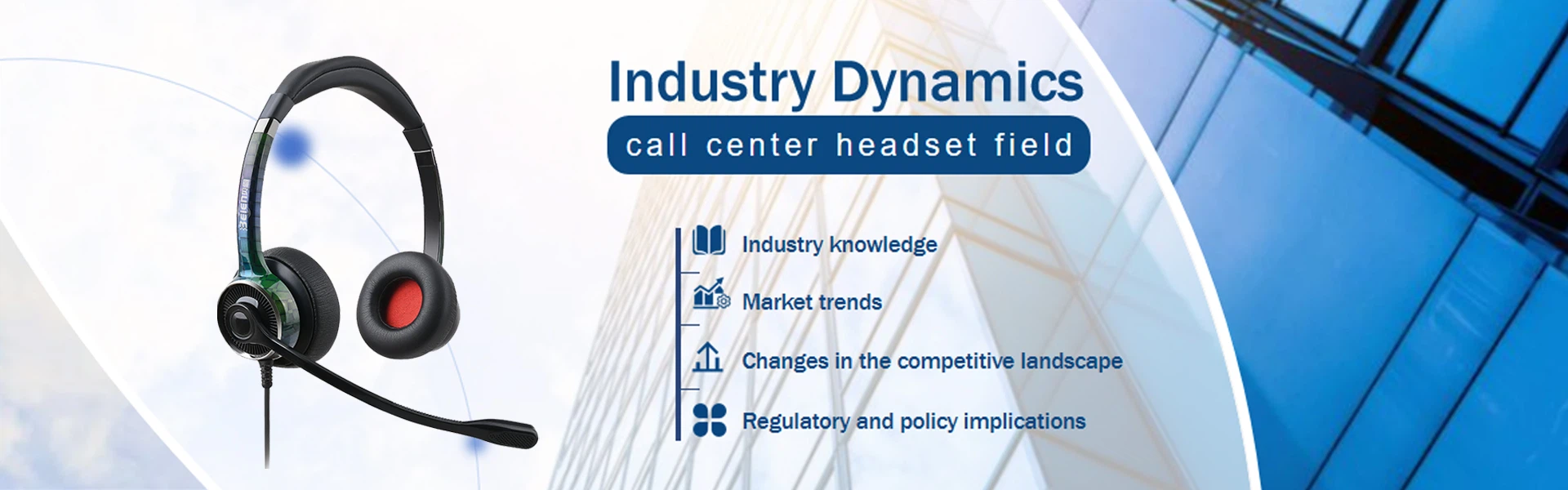
What you hear referred to as a "telephone headset" is known in the professional world as a contact center headset (or simply a "call center headset"). From the ground up, these aren't designed for jamming out to music. They are engineered to solve one specific problem: maintaining crystal-clear communication, all-day comfort, and seamless operation during long hours of high-density voice interaction.
This requirement remains constant whether an agent is handling a banking complaint, processing an e-commerce return, or troubleshooting a broadband outage. The fundamental need is the same: resolving customer issues over the phone during 6 to 8-hour shifts.
The true capability of a professional headset lies in its ability to precisely pick up the human voice, effectively suppress background noise, and support wideband audio for natural, full-sounding speech. These technical attributes don't change just because you switch from the financial sector to retail.
Deep Dive: How Workflow Dictates Hardware Choices
1. The Call Scenarios Are Nearly Identical
Bank agents spend their days handling transfers and account inquiries, while e-commerce reps tackle refunds and shipping updates. On the surface, the business logic differs, but the underlying structure is exactly the same. Both rely on a standard "agent-to-customer" two-way communication model, set within open-plan offices or centralized workspaces, with daily talk times ranging from 4 to 7 hours.
Because of this, both industries tend to rely on the same pool of equipment suppliers, leading to highly overlapping product selection criteria.
2. The Myth of Spec Sheets: Why Everyone Shares the Same "Parameter List"
Operations managers often face a common puzzle during procurement: If our industries are so different, why are vendors handing us the exact same spec sheets?
The answer lies in an open secret within the headset market: the gap between claimed specs and real-world performance. Many products boast impressive numbers on paper-like a frequency response of 20Hz-20,000Hz-despite the fact that voice communication only truly requires the 100Hz-8,000Hz range. It looks good in a brochure, but it doesn't guarantee a better call.
What actually determines quality are the tangible build elements: Does it feature ENC (Environmental Noise Cancellation)? Is the microphone designed with a unidirectional pickup pattern? Is the cabling durable, and are the ear cushions comfortable for long shifts? These manufacturing nuances are critical, and they remain a priority regardless of whether the agent is processing a refund or a bank transfer.
3. The Industry Myth: "Cheap is Bad" is a Misconception in Call Centers
Many e-commerce managers assume that because their queries are "simple," they can get away with cheap headsets. Meanwhile, banking managers feel that because their data is "sensitive," they must buy the most expensive gear.
The reality? A cheap headset with inflated specs and poor build quality will let background noise bleed through, making it hard for customers to hear you. Conversely, an expensive headset that isn't comfortable will give your agents headaches by the end of their very first training day. Ultimately, both industries are hunting for the exact same thing: the sweet spot between cost-efficiency and high performance.
Practical Guide: How to Determine What Your Team Actually Needs
A. Look at daily talk time.
If your agents are on the phone for more than 3 hours a day, their need for comfort and noise cancellation is identical to that of a bank teller. The litmus test is simple: Do your agents subconsciously rub their ears after a 3-hour shift? If yes, you need better gear.
B. Assess your office noise levels.
If your team works in an open-plan office surrounded by the clatter of keyboards and colleagues chatting, your need for noise isolation is just as critical as in banking. A headset with a dual-mic array and ENC (Environmental Noise Cancellation) can filter out over 90% of background noise, ensuring the customer hears only your voice.
C. Check connectivity and compatibility.
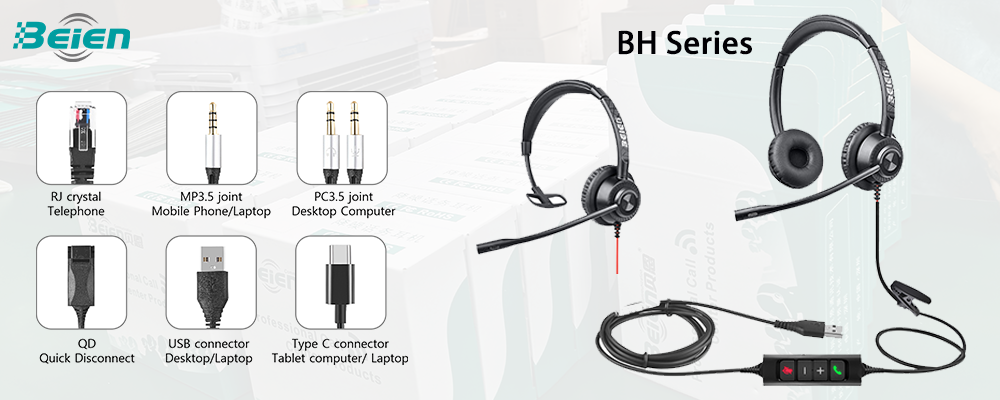
Most professional headsets support a variety of connections, including USB, RJ9, and 3.5mm jacks, making them compatible with different desk phones and PCs. Whether you're using an Avaya system or Microsoft Teams, you can often use the same headset. Opting for a USB-compatible model is usually the safest bet to cover most modern scenarios.
D. Calculate the TCO (Total Cost of Ownership).
A reliable headset might cost twice as much upfront, but if it lasts two years without needing replacement, your overall costs are actually lower. Consider the math: A $7 headset replaced every 6 months costs you $28 over two years. Add in the hidden costs of IT configuration and training time for each replacement, and you're looking at roughly $50. In contrast, a sturdy $20 headset that lasts the full two years has a TCO of just $20.
Industry Trends: The Parallel Paths of Standardization and Personalization
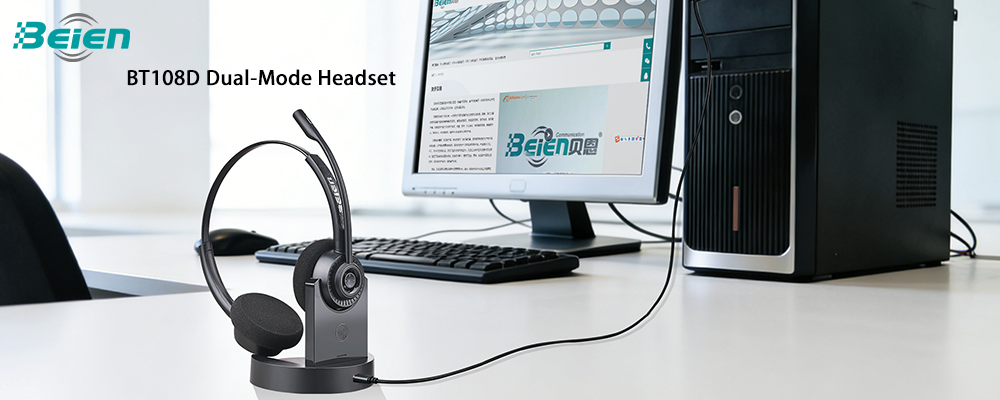
For now, wired headsets remain the undisputed workhorses of the call center world. They offer true plug-and-play convenience, eliminating the constant headaches of signal interference and battery management. Wireless headsets, on the other hand, provide the flexibility needed by supervisors and trainers who are constantly on the move.
But here is the one thing that won't change: No matter how the industry evolves, the core mission of a call center headset remains the same-delivering superior call quality and all-day wearing comfort. These two fundamentals are universal and do not shift based on industry differences.
If you're in the market for professional call center headsets, reach out to the source: Beien. We welcome bulk orders!


